

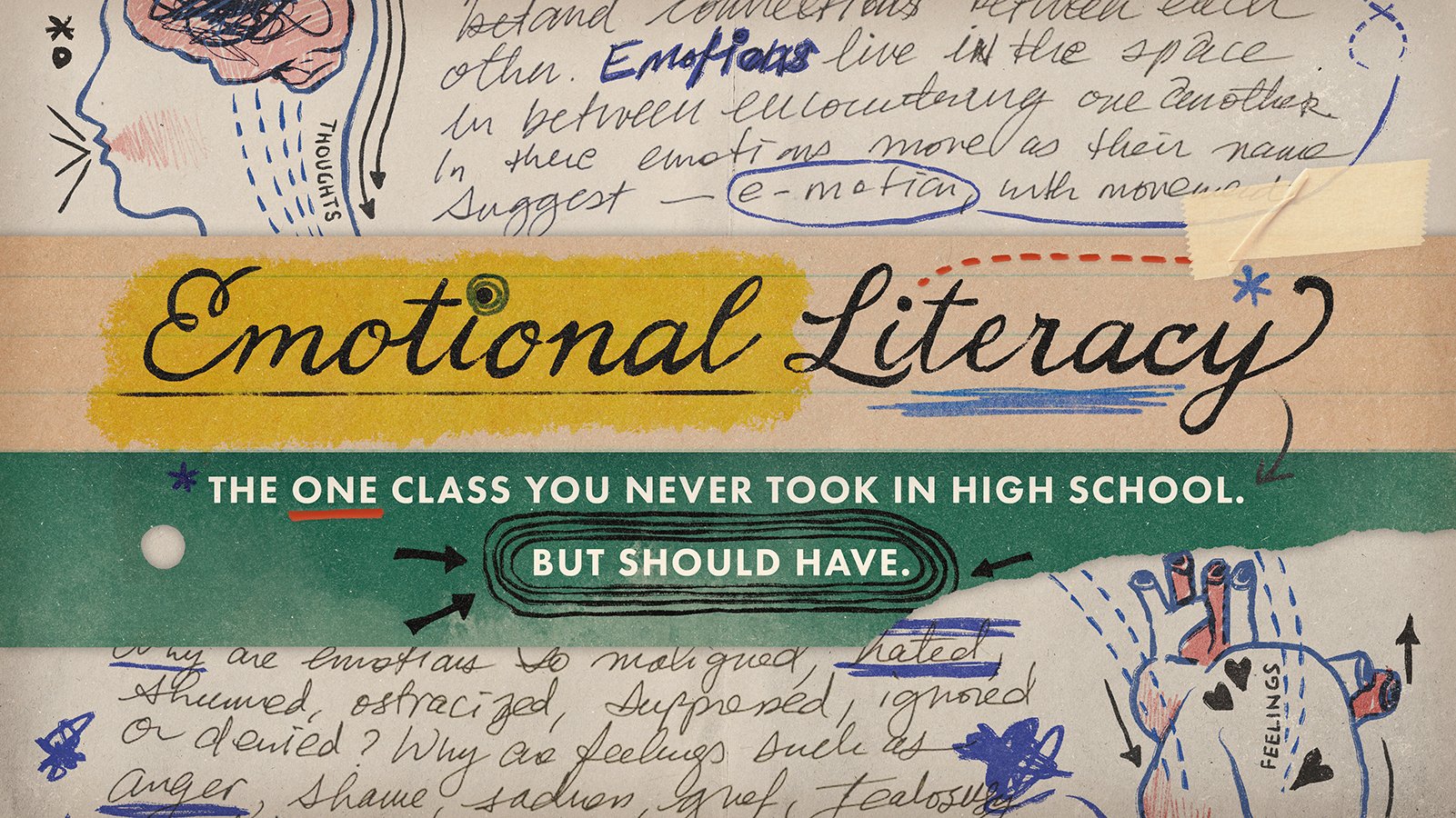
Emotional Literacy:
A course for people who've done therapy and are ready to actually feel their feelings
“This is the one class everyone should have taken in school!”
A 16 week live online course and group therapy experience with psychotherapist and art therapist Esther Kalaba. Art, breathwork, movement, Kundalini yoga, and a small circle of real humans, for people ready to stop talking about their feelings and start living them.
Fall cohort begins Wednesday, October 21, 2026
Early bird tuition ends October 5th
Psychotherapy receipts provided for insurance and taxes.
Enter: Emotional Literacy.
Finally—a course designed for the grown-up empath, therapy grad, or sensitive soul who’s tired of riding the emotional rollercoaster with no seatbelt, no snacks, and absolutely no manual.
Over 16 weeks online, you’ll dive into the messy, beautiful world of emotional intelligence—minus the jargon, minus the shame. Through a blend of theory, somatic awareness, art therapy, movement, breathwork, creative expression, and Kundalini yoga, you’ll learn to recognize, understand, and communicate your feelings in ways that build real connection—with yourself and others.
You've done the therapy. You can name your attachment style at a dinner party. You know exactly why you feel what you feel. And yet the moment someone doesn't text back, raises an eyebrow, or asks for more than you have to give, your body goes back into the familiar patterns it has always done and you feel like you haven’t made any progress at all.
Insight lives in the head but emotional literacy lives in the body. And you can't think your way into feeling. You have to feel your way through. Most of us don’t have a place to do that.

You’ll discover:
Where each emotion lives in your body, and how to feel it all the way through instead of talking around it or avoiding it (and do this WITH other people present)
What your feelings are trying to tell you (they're not out to ruin your life)
Why understanding a pattern isn't the same as changing it, and what actually does
How to respond from your centre instead of your survival mode
How to stay present with other people's big feelings without the shame spiral
This is therapy 2.0: for people who are tired of just talking about their “issues” and ready to take creative, embodied action toward healing, integration, and a deeper understanding of who they really are.
Emotions are the glue of human relationships. They’re what make us feel alive, connected, and understood, they are fundamental to all our interactions—and yet most of us were never taught how to feel them… or actually work with them. This course is here to change that.
Each week explores one of the Big Emotions—like Shame, Anger, Grief, Fear, Joy and Desire—and teaches you how to feel them safely, move through them consciously, and understand what they’re really trying to tell you.

And yes, there will be art. And breathing. And Kundalini yoga. And likely at least one moment where you go, “Whoa—that all makes sense!”
This isn’t about fixing yourself or “getting over it.” It’s about cultivating curiosity, compassion, and creative awareness. You’ll laugh, cry, doodle, journal, and probably dance a little awkwardly—and you’ll leave with a deeper understanding of your emotional landscape and how to navigate it with courage and grace.
Whether you’re a therapist who wants to deepen your practice or someone just learning to feel without freaking out, Emotional Literacy offers you the tools, language, and community to live—and love—with more confidence, creativity, and connection.
Let’s stop emotionally spiraling in isolation. Let’s learn to feel this human experience—together.

Why Group Therapy?
Let’s be honest: when people hear the words group therapy, they often want to sprint in the opposite direction. “Nope, not me. I’m too shy, too anxious, too awkward, too introverted, too weird, too emotional, too talkative, too quiet…”.
But after 20 years as a therapist, I can tell you this—group therapy is often more effective than individual therapy. Why? Because you get a real-life laboratory to practice everything that’s hard about being human—like boundaries, vulnerability, communication, and connection. Let’s face it, that’s usually why you came to therapy in the first place.
In a group, you get to experiment, mess up, repair, and try again—all within a supportive circle of people who are learning the exact same thing. And here’s the secret: once you’re in it, you realize you’re not alone. Everyone’s carrying their own bundle of insecurities, stories, and tender spots. The magic happens when we share them—and discover that expressing ourselves authentically not only feels good, it feels relieving. And with time and practice, you actually get good at it.
Most people don’t have spaces where they can be truly real.
This is that space.

Why Emotions Matter?
Emotions are not the problem—they’re the portal. They are the body’s built-in navigation system, guiding us through the world of relationships and helping us make sense of what it means to be human. Every feeling carries information: anger points to boundaries, sadness signals loss or love, fear keeps us safe, joy reminds us that life is worth showing up for. When we understand our emotions instead of avoiding them, we start to navigate life with clarity and compassion.

Emotions are what make us relatable, what connect us to others, and what allow us to build meaningful relationships—at home, at work, and in the world. They are the glue of connection and the language of authenticity. Learning to listen to them is not indulgent—it’s intelligent. It’s how we become better parents, partners, colleagues, creators, and ultimately, better humans.
But here’s the thing… it’s not enough to know this stuff because it is not intellectual. It is felt, embodied. And this is the place where most people don’t have the experience.

We feel with one another and this is why you cannot do this work on your own.
Who This Class Is For
This course is for anyone who’s ready to stop intellectualizing their feelings and start actually feeling them. It’s for the therapy grads, the self-aware overthinkers, the empaths who’ve spent years managing everyone else’s emotions but their own. It’s for people who want to take all the insight they’ve gained from therapy, books, podcasts, and self-help—and finally integrate it into their body, their relationships, and their real life.

You might be someone who:
Has done therapy and learned why you feel what you feel, but not how to work with it in the moment.
Feels “too much,” “too sensitive,” or like you’re constantly riding the emotional rollercoaster without a seatbelt.
Wants to build emotional confidence—so you can express yourself clearly, set boundaries with grace, and connect more authentically with others.
Works in a helping or healing profession and wants to deepen your emotional literacy as part of your own self-care and professional growth.
Simply knows there’s more to being human than numbing out or staying stuck—and you’re ready to explore that “more.”
This class is for you if you’re curious, creative, and courageous enough to turn toward your emotional world instead of away from it. You don’t have to be an artist, a yogi, or a therapy expert—just willing to show up as you are.
What Each Session Looks Like
Think of this course like a university class—with a twist. Each week blends theory and practice, so you’ll get both the intellectual framework and the experiential lab to explore it in real time. You’ll receive readings, reflections, and creative homework to help you integrate what you’re learning. We strongly suggest setting aside dedicated time each week to study, journal, and practice—because these skills are, quite literally, the most important life lessons you never learned in school.

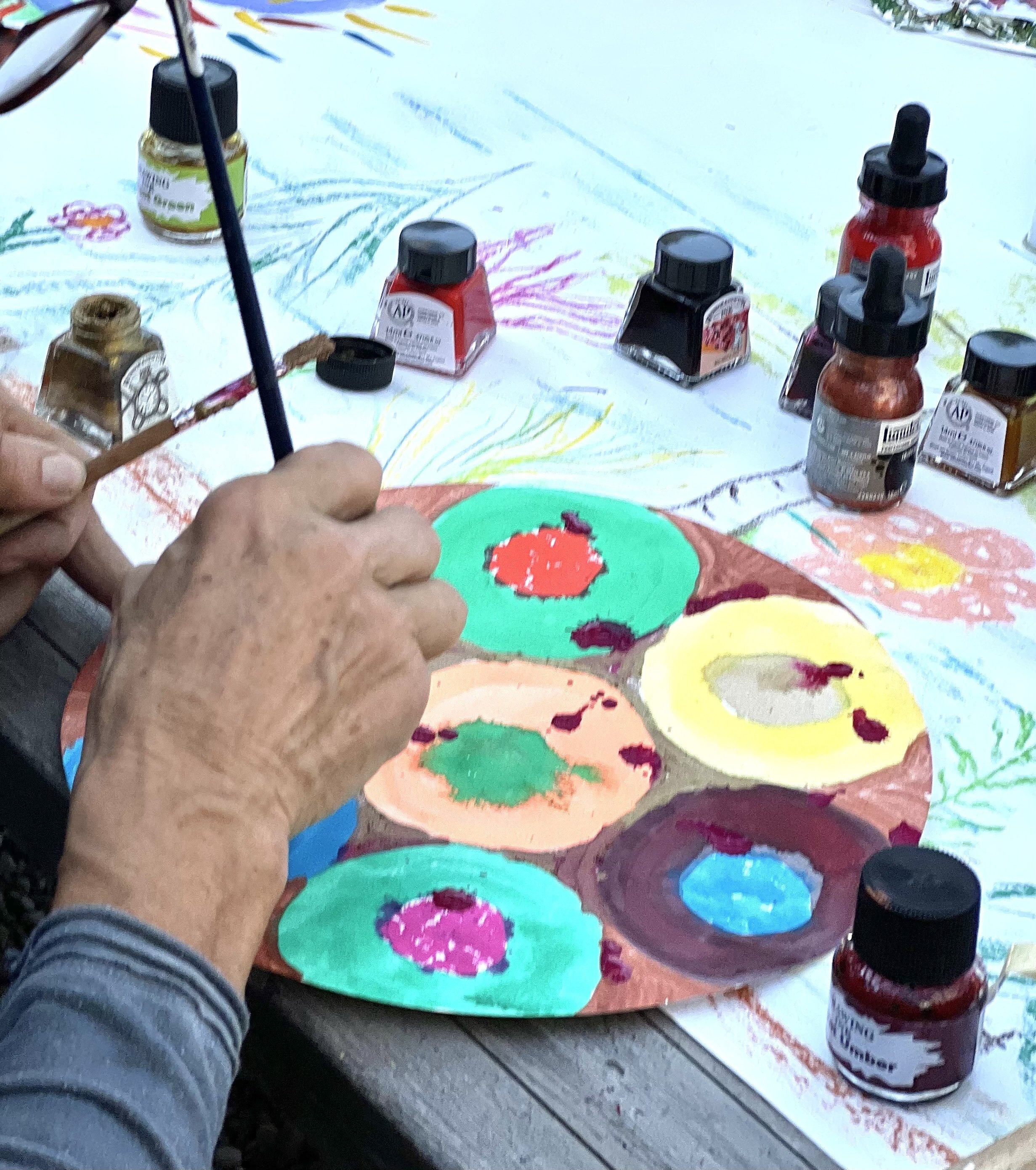
Every session includes group activities, discussions, and creative exercises that bring the material to life. We learn from one another, and asking questions (even the messy, uncomfortable ones) is part of the process. There are absolutely no requirements—just a willingness to explore. In fact, many people who’ve taken this course were surprised by what they were able to express, even those who swore they were “utterly non-creative.” Spoiler: everyone has creativity; it just needs permission to breathe.

About Esther Kalaba M.A., RP
Founder of the SEED Lodge & the People of the Prana, Artist, Kundalini Yoga Teacher
Esther Kalaba is an art therapist, psychotherapist, and certified Kundalini yoga teacher and founder of the People of the Prana & the SEED Lodge with over 20 years of experience working in mental health. A Registered Psychotherapist licensed in Ontario and Quebec, she's worked with thousands of people navigating the ups, downs, and sideways of the emotional landscape.
Emotional Literacy is the culmination of Esther’s life’s work—a response to the question she’s heard from nearly every client she’s worked with in individual therapy: “Why wasn’t this just taught in school?”
She created this course as an answer. Because emotions are the curriculum of being human—and learning to work with them might just be the most important education of your life.
Esther brings equal parts clinical expertise, spiritual depth, artistic creativity, and no-nonsense humour to the classroom (and the healing room). She believes that feelings are important, messy, and completely normal—and her mission is to help you speak their language.

What You’ll Need
You don’t need much to begin—just a curious mind, a willing heart, and a little space in your week to breathe and reflect. Here’s what helps:


Time: Set aside 2 hours for class each week, plus an hour or two for reading, reflection, and creative practice.
Materials: A journal or sketchbook, some simple art supplies (paper, pencils, markers, or paints), and a comfortable space where you can move, write, or lie down for meditation.
Technology: A stable internet connection and Zoom access—camera on or off, totally up to your comfort level.
Mindset: Bring your curiosity, your questions, your resistance, and your wonder. This is a space for learning, not perfection. You’ll get the most out of it if you approach it like emotional training for real life—because that’s exactly what it is.
No special skills required—just show up as you are.

Next class begins October 21, 2026
Can’t join us this time around but are curious… (next cohort in 2027)
Practical Details
-
Course Format
16-week live online group course via Zoom. Each session includes guided practice, group discussion, and creative exploration. Recordings of the lectures and notes are available for anyone who can’t attend live, class discussions and sharing is not recorded.
-
Start date
2026 Fall Cohort Begins Wednesday, October 21. Classes run from 7-9pm EST every week.
Please note that class size is kept small to allow for personal reflection and sharing.
-
Location
Live via Zoom (link provided upon registration).
Create a quiet, comfortable space for yourself to move, breathe, and reflect. -
Group Size
Small and intimate to ensure safety, connection, and individualized support.
-
Tuition
Early bird $1,995 CAD until October 5, then $2,495 CAD. Includes all 16 live sessions, lecture recordings, reading materials, and creative assignments.
Insurance: Because the course is led by a Registered Psychotherapist, you'll receive psychotherapy receipts at the midpoint and end. Many extended health plans cover them.
Commitment: All sales are final. We ask this as a commitment to your own process: once you're in, the circle holds your place for all 16 weeks. -
Registration Process
Complete the application form on the website.
Book your complimentary 15-minute intake call to ensure the program is the right fit.
Once accepted, you’ll receive a welcome package, schedule, and materials list.
-
Refund Policy
Please note that there are NO REFUNDS for this class.
-
Contact
For any questions or more information please consult the FAQs and reach out to us at: arrive@theseedlodge.com
FAQs
-
Emotional Literacy is a 16 week live online group course led by Registered Psychotherapist and art therapist Esther Kalaba. Each week explores one core emotion, such as shame, fear, anger, grief, or desire, through teaching, group process, art, breathwork, and Kundalini yoga. It's designed for adults who want to feel and work with their emotions, not just understand them.
-
Each 2 hour class blends a short teaching on that week's emotion with guided practice. You might paint, journal, breathe, move, or do a Kundalini yoga set, then reflect with the group. Every class includes discussion and creative exercises, and questions, even the messy ones, are welcome.
-
Only if you want to. You're always in charge of what you share and how deep you go. Many participants find that simply listening to others is just as powerful as speaking. There's no pressure, only invitation. The group environment is supportive, confidential, and built on mutual respect.
-
No problem. All lectures are recorded, and you'll have access to course notes and experiential exercises so you can catch up at your own pace. The group decides together whether class discussions are recorded, to maintain the intimacy of the container. That said, the real magic happens in real time connection, so we encourage you to attend live whenever possible.
-
Yes, absolutely. Many participants take Emotional Literacy alongside individual therapy, and it complements it beautifully. Think of this as therapy 2.0: a place to integrate what you're learning into your body, relationships, and daily life.
-
Not at all. You don’t need to “know how to” make art, dance, or meditate. All the practices are guided and accessible to everyone. People who start the course saying “I’m not creative” often end up surprising themselves with what they express.
-
Then you're in excellent company. Most people feel that way at first, and then quickly discover how safe and supportive it feels to be witnessed by others. This isn't a performance; it's a practice. And you might just find that being seen for who you really are is deeply healing.
-
This course isn’t suitable for anyone currently in acute crisis, active addiction withdrawal, or needing one-on-one clinical support. It’s designed for people who are emotionally stable enough to engage in group work and self-reflection within a gentle, guided structure.
-
Not yet, but stay tuned! Emotional Literacy is designed as a personal and professional growth course. Future versions may include certification options for therapists, coaches, and educators.
-
Each class runs 2 hours, plus about an hour or two weekly for reading, reflection, and creative practice. There's also an hour of office hours each week for extra support. The more you put in, the more you'll get out, but life happens, and flexibility is built in.
-
Emotional literacy is the ability to recognize, understand, name, and express your emotions, and to respond to other people's emotions with awareness. It's different from simply knowing about feelings: it's a felt, embodied skill. At The SEED Lodge, psychotherapist Esther Kalaba teaches emotional literacy as a learnable practice that combines psychology, art therapy, breathwork, and movement.
-
Yes. This course was built for people who've done therapy and are ready to actually feel their feelings. Therapy often gives you insight into why you feel what you feel. Emotional Literacy focuses on how: feeling emotions in your body, moving them through art and breath, and practicing new responses in real time with a supportive group.
-
Talk therapy works mainly through conversation. Emotional Literacy is experiential: you learn emotion theory, then practice it through art making, breathwork, movement, Kundalini yoga, and group process. The group itself becomes a live practice space for boundaries, vulnerability, and connection. Many participants find it deeper, more immersive, and more fun than weekly one on one sessions.
-
No. The Kundalini yoga, breathwork, and movement practices are guided step by step and can be adapted to your body. You can sit in a chair, lie down, or simply follow the breath. Esther is a certified Kundalini yoga teacher and will offer options throughout.
-
The fall 2026 cohort begins Wednesday, October 21, 2026, and runs weekly until February 10, 2027, with a final integration class on March 24, 2027. Classes are live on Zoom from 7 to 9 pm Eastern Time. There's no class on December 23 or December 30. The course runs once a year, each fall.
-
Tuition is $1,995 CAD at the early bird rate until October 5, 2026, and $2,495 CAD after that. It includes all live sessions, lecture recordings, reading materials, and creative assignments.
-
It may be. The course is led by a Registered Psychotherapist, so you'll receive psychotherapy receipts. Many Canadian extended health plans reimburse psychotherapy services, so check your plan for coverage before you apply.
-
All sales are final. We ask this as a commitment to your own process: once you join, the circle holds your place for the full 16 weeks.
-
Complete the short application on this page. Once you're accepted, you'll receive a welcome package, schedule, and materials list. Questions? Email arrive@theseedlodge.com.
Not sure it's for you yet?
Book a free 15 minute discovery call with Esther and find out if this circle is the right fit for you.
Your feelings have been waiting a long time for someone to listen. This fall, let it be you, with a circle of people who get it.
Not ready this year? Join the waitlist for 2027, and sign up for our mailing list below so you don't miss what's next.