

The Art and Science of Rest
A clinical training in Breathwork and Yoga Nidra for therapists and health professionals.
December 3 to 6, 2026 · The SEED Lodge, Grey Highlands, Ontario
Four day residential training, all inclusive taught by Esther Kalaba MA, RP & Marianne Larochelle
CE: 26.5 contact hours (including 10 hours of supervised practice teaching)
Certificate of Completion for your continuing education records
It is not enough to talk to your clients about calming down or regulating their nervous systems. Wouldn't you love a set of tools you could offer them in session, and an understanding of how to guide them there?
FOR THE ONES WHO HOLD EVERYONE ELSE
Insight takes people far but the body needs its own way in. When a client is flooded, a well placed question lands only after the breath slows down and the shoulders drop. That shift from activation to rest is a skill, and like any clinical skill, it can be taught, practised and refined.
This training gives you two structured, teachable, evidence informed methods for guiding that shift: breathing practices you can offer in the first five minutes of a session, and Yoga Nidra, a guided descent into deep rest you can lead for individuals or groups. You also learn the discernment to know which to use when.
More importantly, this training replenishes the healer. You learn these practices not only to share with clients, but to reset your own nervous system between sessions or at the end of a long day. And because you can only guide someone into rest you have inhabited yourself, you will spend four days on 56 acres of forest and field near Georgian Bay, learning it from the inside.
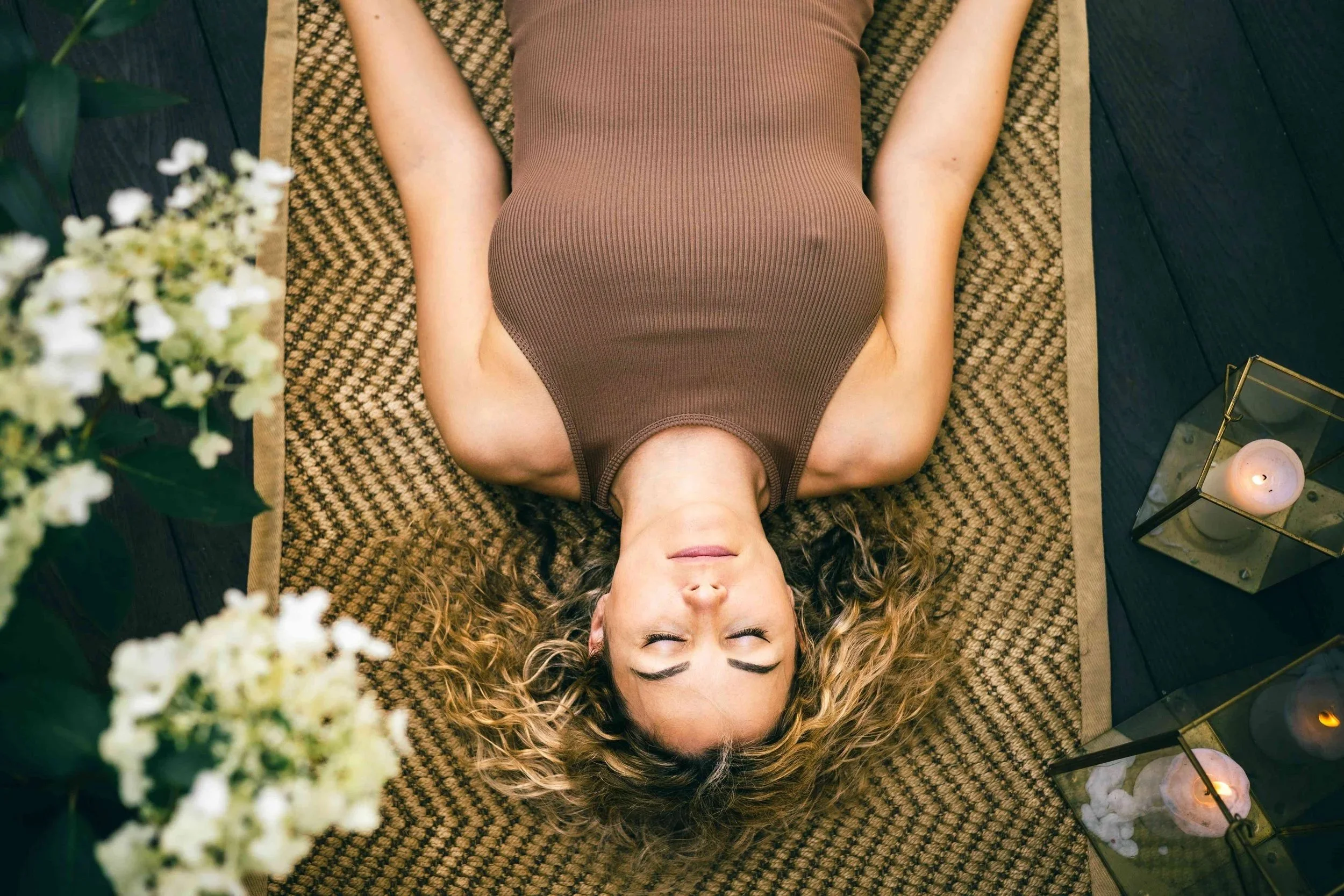
Breath is the doorway.
Yoga Nidra is the descent.
This is an experiential immersion in finding calm in your own body, so you can guide your clients there with confidence.
This Training Is For You If…
-
You see clients carrying stress, anxiety or trauma and want reliable body based tools beside your talk based work
-
Your clients ask for help with sleep, or you want to lead relaxation groups with real methodology behind them
-
You are curious about where contemplative practice meets neuroscience, and want to explore it with discernment
-
You are running on empty and know that what you offer your clients depends on what you have left
-
You are new to breathwork and Yoga Nidra, or experienced and ready to go deeper. Beginners are warmly welcome

Two practices, one nervous system
Yoga Nidra, with Marianne Larochelle
Nidrā is often translated as sleep, yet in the yogic tradition it names something rarer: a threshold where the body rests profoundly while awareness stays luminous and present. You learn the traditional structure of the practice alongside contemporary neuroscience, and you learn to guide it with your own voice.
The eight stages, Sankalpa and rotation of consciousness
The four states of consciousness held in AUM: waking, dreaming, deep sleep and Turīya
The five Koshas as maps of body, breath, mind, wisdom and bliss
Voice, pacing, imagery and the language of suggestion
Yoga Nidra, NSDR, meditation and hypnosis compared
Writing your own scripts
Begin with Breath, with Esther Kalaba, RP, AT
Esther's foundational breathwork method, drawn from 20 years of daily practice and taught for clinical settings. Most adults breathe 16 to 20 times a minute, often from the upper chest. You learn to guide a client toward a slower, fuller breath in three movements, and to choose the one their nervous system needs.
Finding ground. Long and deep breathing, the diaphragm, the pelvic floor, and retraining paradoxical and chest breathing
Finding fire. Breath of Fire for energy and focus, with its contraindications
Creating space. Segmented breathing and breath suspensions, where the nervous system resets in the pause
The stress response, neuroception and how the mind follows the breath
Trauma sensitive adaptations for a hyper aroused nervous system
The four days
A gradual descent, day by day. 26.5 contact hours, including 10 hours of supervised practice teaching, with a long midday break each day to walk the land, journal or rest.
Thursday, December 3: Arrival and the nervous system
1:00 to 2:00 PM: Arrive and settle in
2:00 to 3:00 PM: Opening with Esther and Marianne: what is rest, what are nervous system relaxation and calm, and what are we here to achieve?
3:00 to 5:30 PM: Begin with Breath, module one: long and deep breathing, the stress response and the breath, your own breathing rate
5:30 to 6:00 PM: Practice teaching: guide a partner through their first long, slow breaths
6:00 PM: Dinner
7:30 to 9:00 PM: Introduction to Yoga Nidra, the four states of consciousness, a first guided practice
Friday, December 4: Breath as a clinical tool
6:00 to 7:00 AM: Morning yoga and breathwork with Esther, then sauna and breakfast
9:30 to 11:00 AM: Begin with Breath: the musculature of breathing, the diaphragm, deepening the breath, counting breaths and an introduction to Breath of Fire
11:00 AM to 12:30 PM: Practice teaching: teach long and deep breathing in pairs, with feedback
12:30 to 2:30 PM: Lunch, rest and forest walks
2:30 to 4:30 PM: Yoga Nidra: the eight stages, the five Koshas, traditional and contemporary maps
4:30 to 5:30 PM: Practice teaching: guide a rotation of consciousness in pairs
7:30 to 9:00 PM: Gong sound healing and rest
Saturday, December 5: The art of guiding
6:00 to 7:00 AM: Practice teaching: participants lead morning breathwork in small groups, then sauna and breakfast
9:30 to 11:00 AM: Yoga Nidra: voice, pacing, hypnotic language, imagery and metaphor
11:00 AM to 12:30 PM: Practice teaching: guide Yoga Nidra in pairs, with feedback from Marianne
12:30 to 2:30 PM: Lunch, rest and forest walks
2:30 to 4:00 PM: Begin with Breath: creating space with segmented breathing and breath suspensions
4:00 to 5:30 PM: Practice teaching: breath practicum in small groups, with feedback from Esther
7:30 to 8:30 PM: Evening meditation with Esther, then Yoga Nidra with Marianne
Sunday, December 6: Your own voice
6:00 to 7:00 AM: Practice teaching: participants lead morning yoga and breathwork, then sauna and breakfast
9:00 to 10:30 AM: Designing a full session from breath to Nidra, writing your own script
10:30 AM to 12:30 PM: Practice teaching: guide your complete session for a small group, with faculty feedback
12:30 PM: Lunch
1:30 to 2:00 PM: Closing circle and reflections
2:00 PM: Departure
Practising responsibly
Yoga Nidra and breathwork are complementary practices. They sit alongside psychotherapy and medical care, and they add to your existing scope of practice, complementing your clinical training and the treatment you already provide. Schedule subject to small adjustments.
Learning rest from the inside
How can you move a client toward calm when you are dysregulated yourself? Your clients do not only hear your words. Their nervous systems read your breath, the pace of your speech, the softness or tension in your voice, the stillness in your body.
Yoga Nidra makes this especially clear. It is a state of coherence, where breath, voice, attention and body settle into one rhythm, and the person listening is invited to settle with you. A growing body of research on the therapeutic relationship points in the same direction: a settled practitioner helps a client settle.
So you practise everything on yourself first. Each day begins and ends in practice, and you are guided into Yoga Nidra yourself before you are asked to guide anyone else. By Sunday you are guiding from a state you know how to find, and you leave knowing how to return to it between sessions and at the end of a long day.
By the end of this training, you will be able to:
Explain the stress response to a client in plain language, and show them how to shift it with their breath
Choose the right breathing practice for anxiety, low mood, insomnia or overwhelm, and know when to hold back
Guide a complete Yoga Nidra session, one to one or with a group
Use voice, pacing and language as regulatory tools in every session you lead
Write your own Yoga Nidra scripts, tailored to your client population
Distinguish traditional teachings, emerging research and established clinical evidence
Weave short regulation practices into talk therapy, assessment or group work
Reset your own nervous system between sessions or at the end of a long day
Ancient practice. Modern understanding.
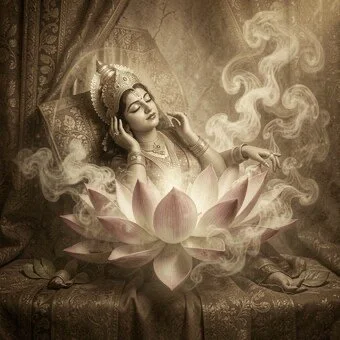
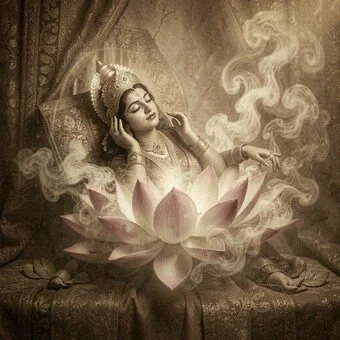
In Hindu mythology, the goddess Nidrā governs cosmic sleep. Between cycles of creation, Vishnu rests upon the infinite ocean while the universe waits within the dream of divine awareness. The teaching inside the image is simple and radical: sleep is a doorway into another dimension of being.
Marianne brings these maps into the room alongside the neuroscience, drawing on Kashmir Shaivism, Tantra, Patañjali's classical yoga and the lucid awareness of Tibetan Dream Yoga. Every belief system is welcome here. These traditions are offered as maps for exploration, held side by side with contemporary science.
What happens as the body descends into rest
Gamma, 30 to 100 Hz: fast integrative processing and peak focus. Usually quiet during Yoga Nidra.
Beta, 12 to 30 Hz: the ordinary waking mind. Beta activity begins to ease early in the practice.
Alpha, 8 to 12 Hz: relaxed wakefulness and inward attention, marking the opening and closing of the practice.
Theta, 4 to 8 Hz: the threshold of sleep, rich in imagery. Much of the practice unfolds in the alpha and theta range, with awareness held.
Delta, 0.5 to 4 Hz: dreamless, slow wave sleep and physical restoration. Traditional accounts describe touching this depth while remaining aware.
Frequency bands are approximate, and their boundaries vary between research sources.
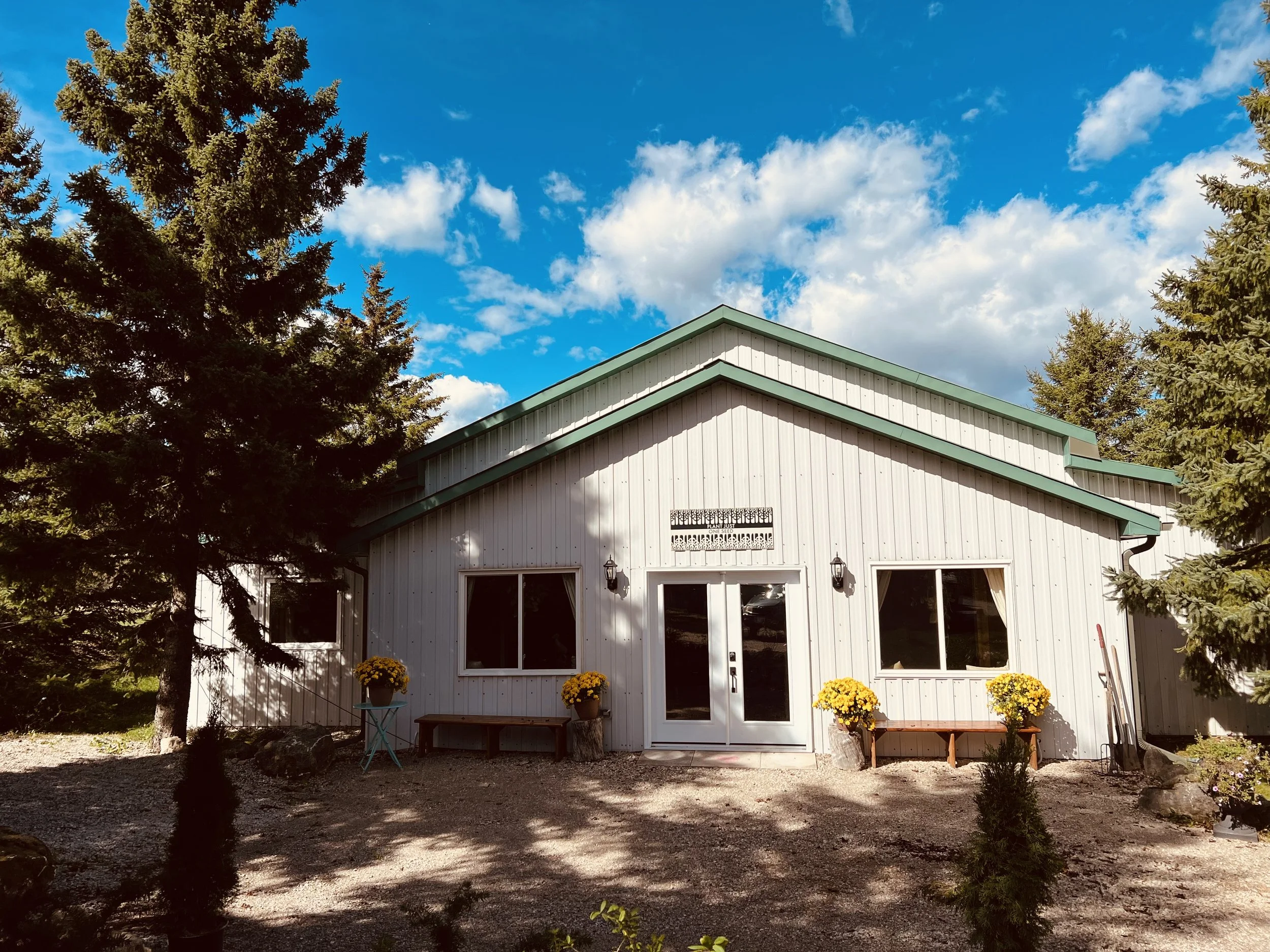
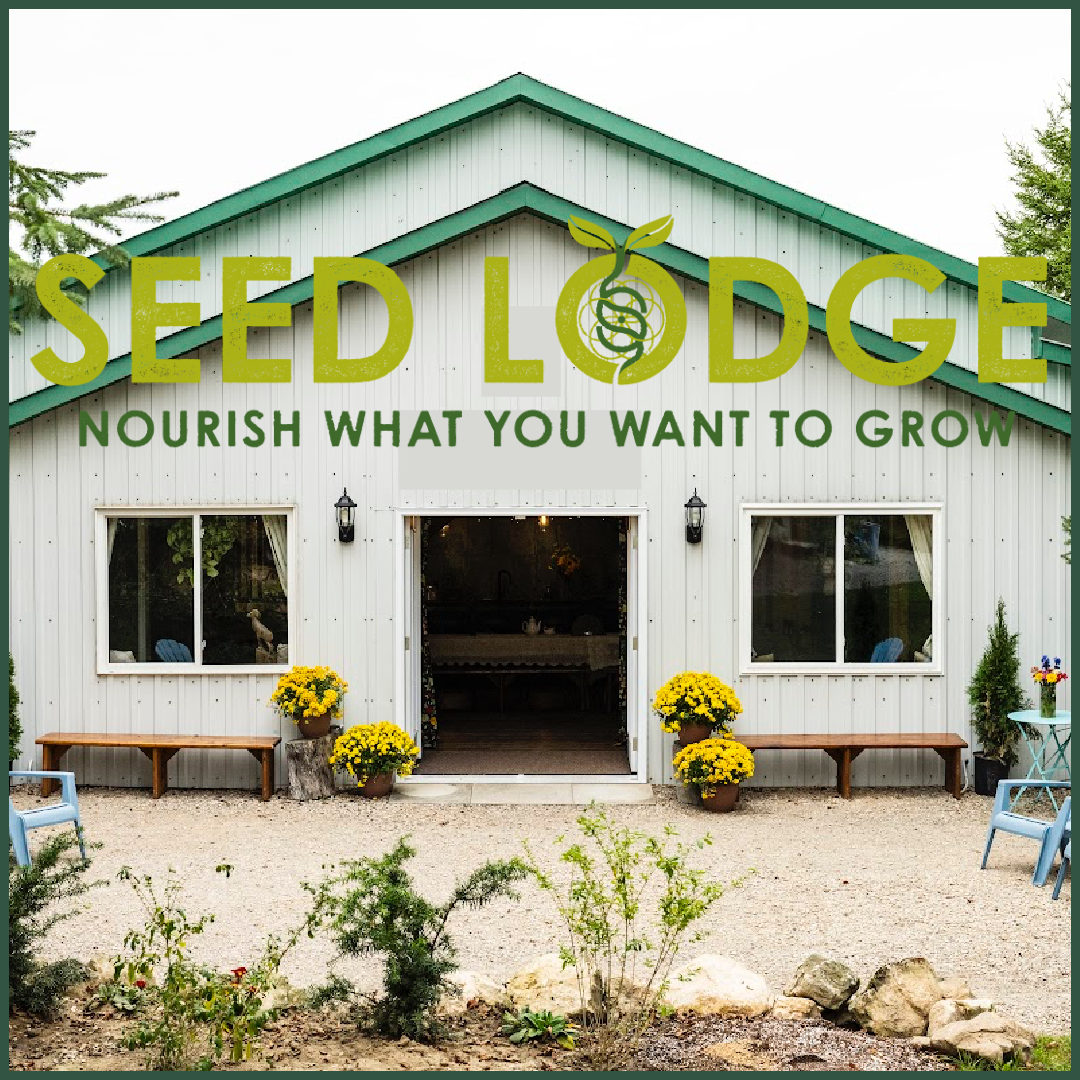
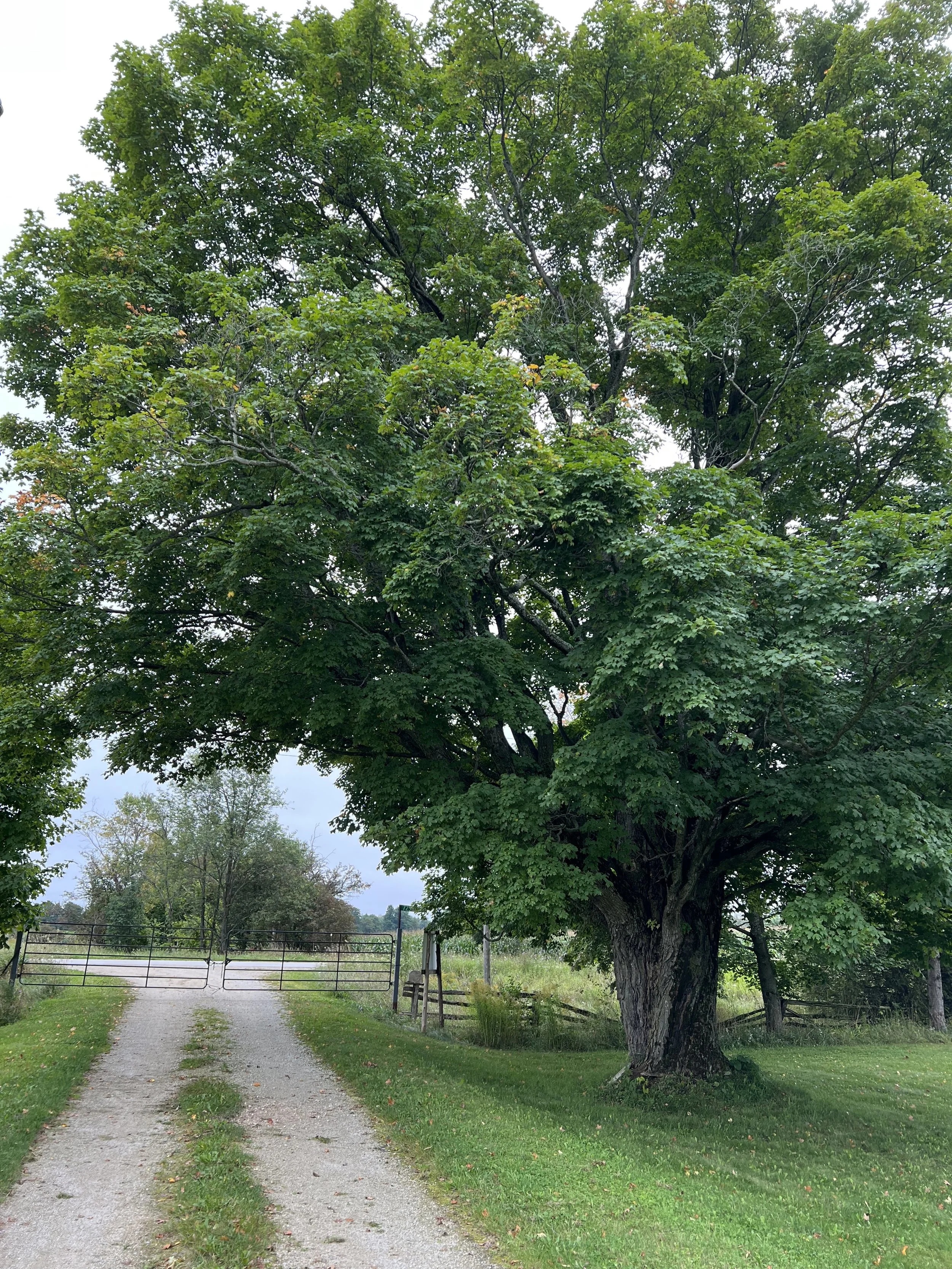
The setting is part of the curriculum. The SEED Lodge sits on 56 acres of forest and farmland near Georgian Bay, about two hours from Toronto. Vegetarian meals are prepared with care and shared at the table with your cohort, with a morning sauna, forest trails and daily 6:00 AM yoga and breathwork. Time to eat slowly. Time to walk. Time to journal. Time to simply be.






Sign Up Now
-
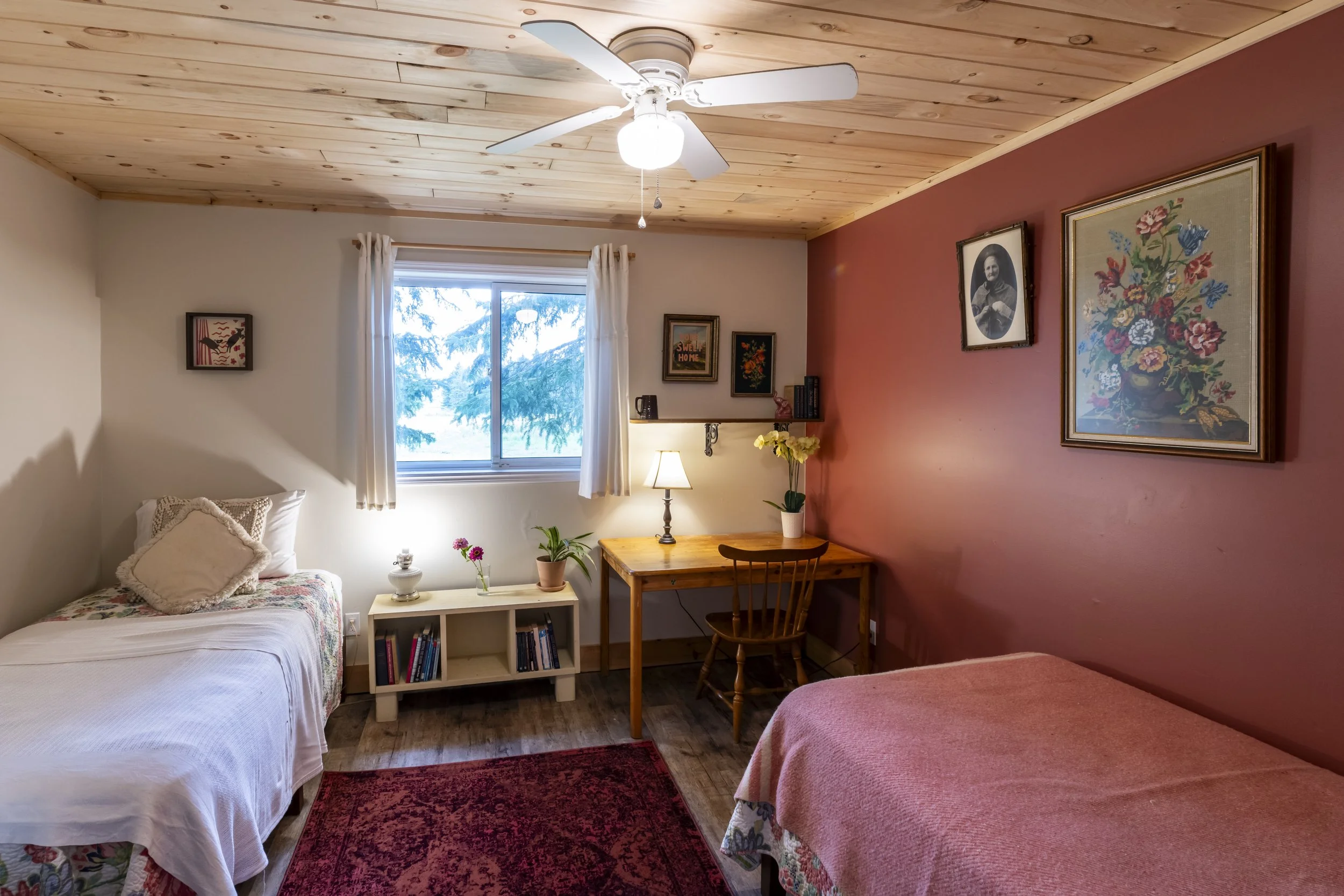
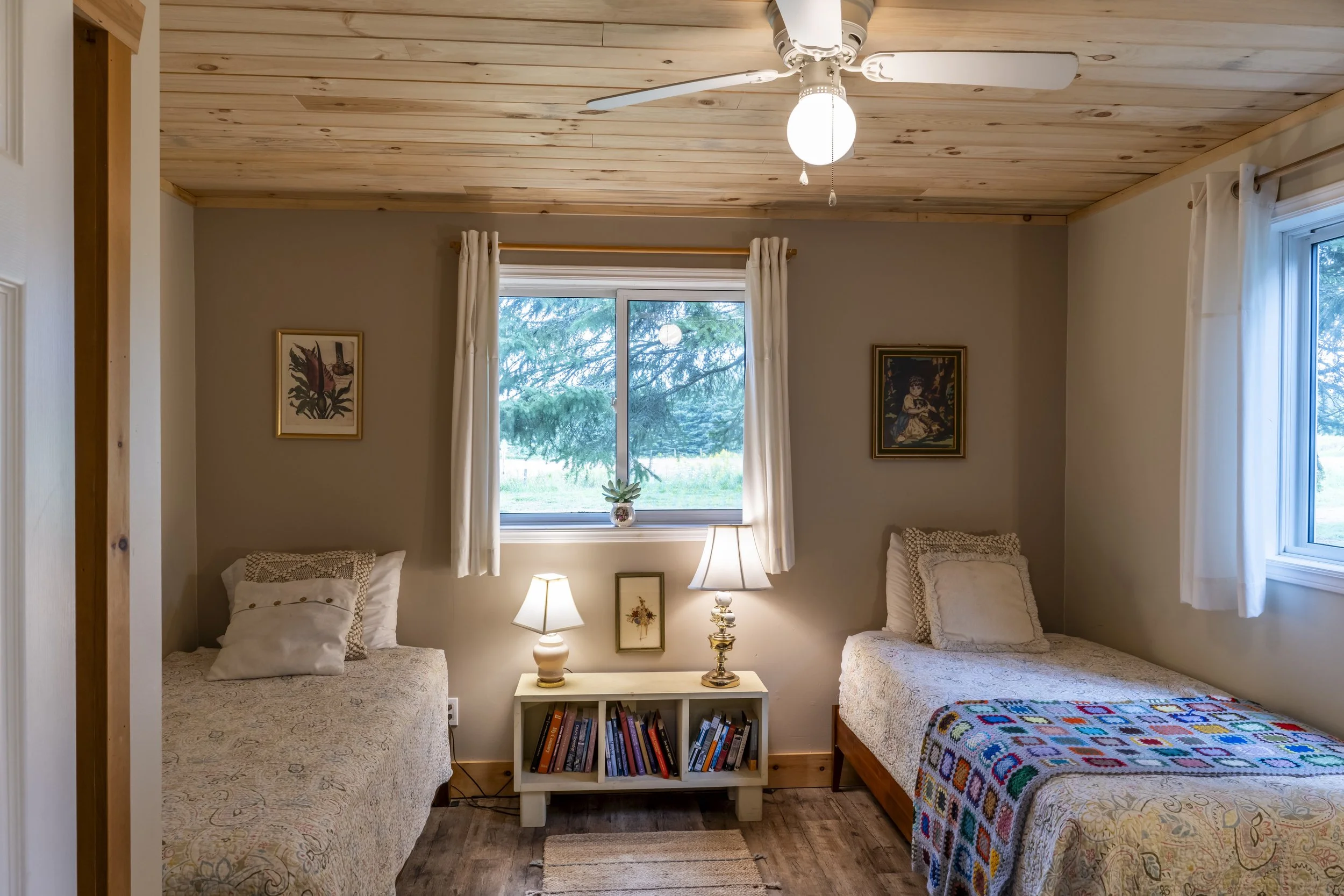
![A cozy bedroom with two twin beds placed on opposite sides, each with patterned bedding and pillows. A small bookshelf with books sits between the beds beneath a window with white curtains. On each side of the window, there are framed artworks on the wall. Two lamps on small tables are positioned beside each bed, providing warm lighting. The ceiling is made of wooden planks with a ceiling fan and light fixture.]()
Semi-Private Room
Share a room with one other participant, with shared bathrooms. Three nights, all vegetarian meals and sauna access. Let us know if you would like to share with a colleague.
$1,795 + tax early rate until October 31, then $1,995 + tax.
-
![Cozy pink room at the SEED Lodge]()
Private Room
Your own room, with shared bathrooms. Three nights, all vegetarian meals and sauna access.
$2,195 + tax early rate until October 31, then $2,450 + tax.
-
![A cozy bedroom with a wood-paneled ceiling, beige walls, and two windows with cream curtains. There's a bed with white bedding and pillows, a small wooden side table with figurines, a potted plant, and a lamp. A framed nature photo hangs on the wall.]()
The Art and Science of Rest PLUS
Add PLUS to any option to go deeper. Includes the complete online Begin with Breath course as soon as you register, plus a private 60 minute online integration session in January.
Add $495 for one session with Esther or Marianne, or add $795 for one session with each.
-
![A woman dressed in traditional attire, sitting peacefully with her eyes closed, surrounded by smoke, inside a decorative room, emerging from a large lotus flower.]()
Commuter
The full training, lunches and dinners, for those staying nearby.
$1,450 + tax early rate until October 31, then $1,650 + tax.

Your faculty
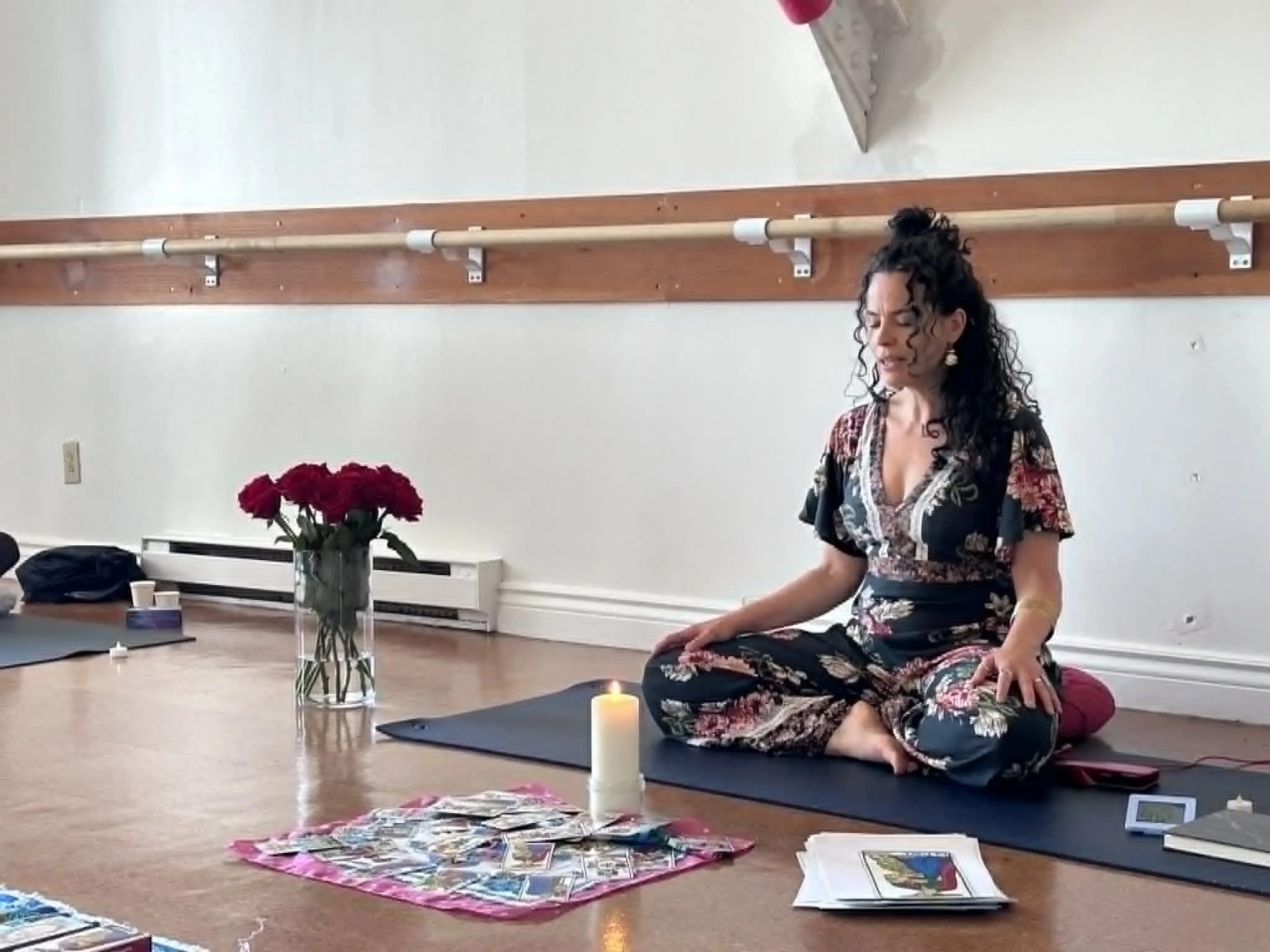
Marianne Larochelle
Yoga Nidra teacher and trainer, visual artist
Marianne has spent more than thirty years immersed in yoga, meditation and contemplative traditions. Influenced by Kashmir Shaivism and the Tantric tradition, she weaves the subtle maps of ancient yoga together with contemporary neuroscience: brain states, the nervous system and the mechanisms of relaxation and self-regulation. A visual artist and photographer, she brings a particular gift for imagery, symbolism and the inner landscape of dreams.
She leads Yoga Nidra teacher trainings, including the Yoga Nidra Level 1 training at The SEED Lodge, and today focuses on helping therapists and helping professionals bring Yoga Nidra, breathwork and guided imagery into their existing practice. Participants describe her teaching as clear, structured and profoundly human.
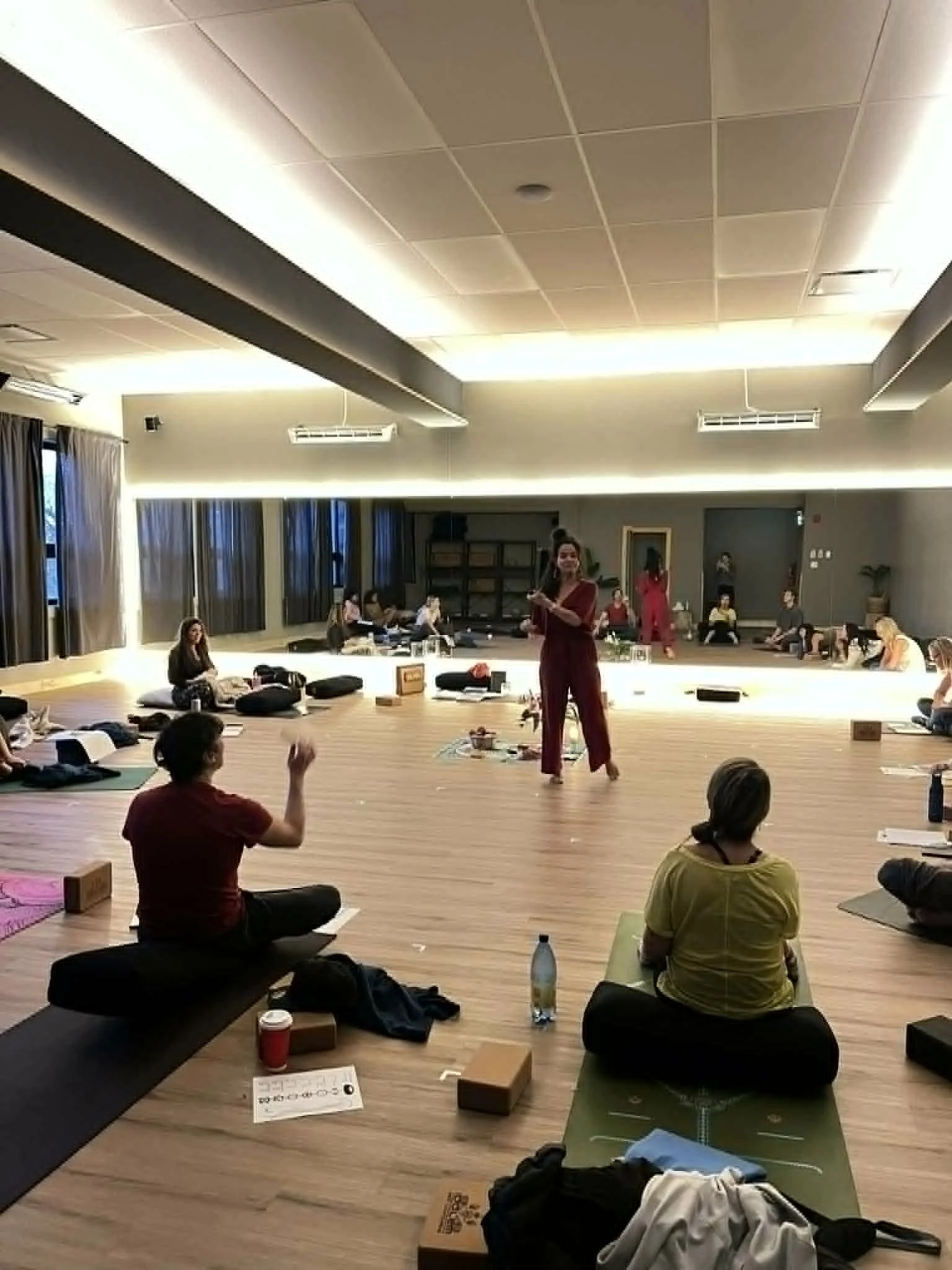
Esther Kalaba, RP, AT
Psychotherapist, art therapist, breathwork educator
Esther is a registered psychotherapist and art therapist with more than 25 years of clinical practice, licensed in Ontario and Quebec. She is also a Kundalini yoga teacher and a trained medical herbalist, and she has practised the breathing techniques she teaches every day for over twenty years. Her work brings the body, the breath and creative expression into the therapy room as pathways to healing.
She founded People of the Prana to teach breathwork as a clinical practice, and has brought it to healthcare workers, organizations and individuals living with grief, anxiety and burnout. Her Begin with Breath program grounds ancient breathing techniques in nervous system science. She is the founder of The SEED Lodge, and her mission is to teach one billion people how to breathe.

Frequently Asked Questions
-
Beginners are welcome. The training starts from foundations and builds step by step. Experienced teachers find the clinical and neuroscience lens adds depth to what they already know.
-
Most trainings teach one practice and a set of scripts. This one teaches a clinical sequence across two practices, breath to meet activation and Yoga Nidra to carry the descent, taught by a registered psychotherapist with a focus on assessment, pacing, contraindications and trauma sensitivity. More than a third of your hours are spent guiding under supervision.
-
Because your state is part of the intervention. Clients settle more readily with a practitioner who is settled, and you can only guide someone toward a place you know how to reach yourself. The daily practice is not a break from the training. It is how the training lands, and it gives you ways to reset between sessions long after you leave.
-
Yes. You leave with breathing practices you can introduce the following week and a complete Yoga Nidra structure you can adapt. Use them within your own professional scope and regulatory guidelines.
-
You receive a certificate for 26.5 contact hours, including 10 hours of supervised practice teaching. Psychotherapists, social workers and nurses in Ontario can record these hours toward their college requirements. Each college and association sets its own requirements, so check with yours to confirm how these hours apply.
-
Near Rocklyn, in Grey Highlands, Ontario, about two hours north of Toronto and close to Georgian Bay. Full directions and carpool options arrive with your welcome packet.
-
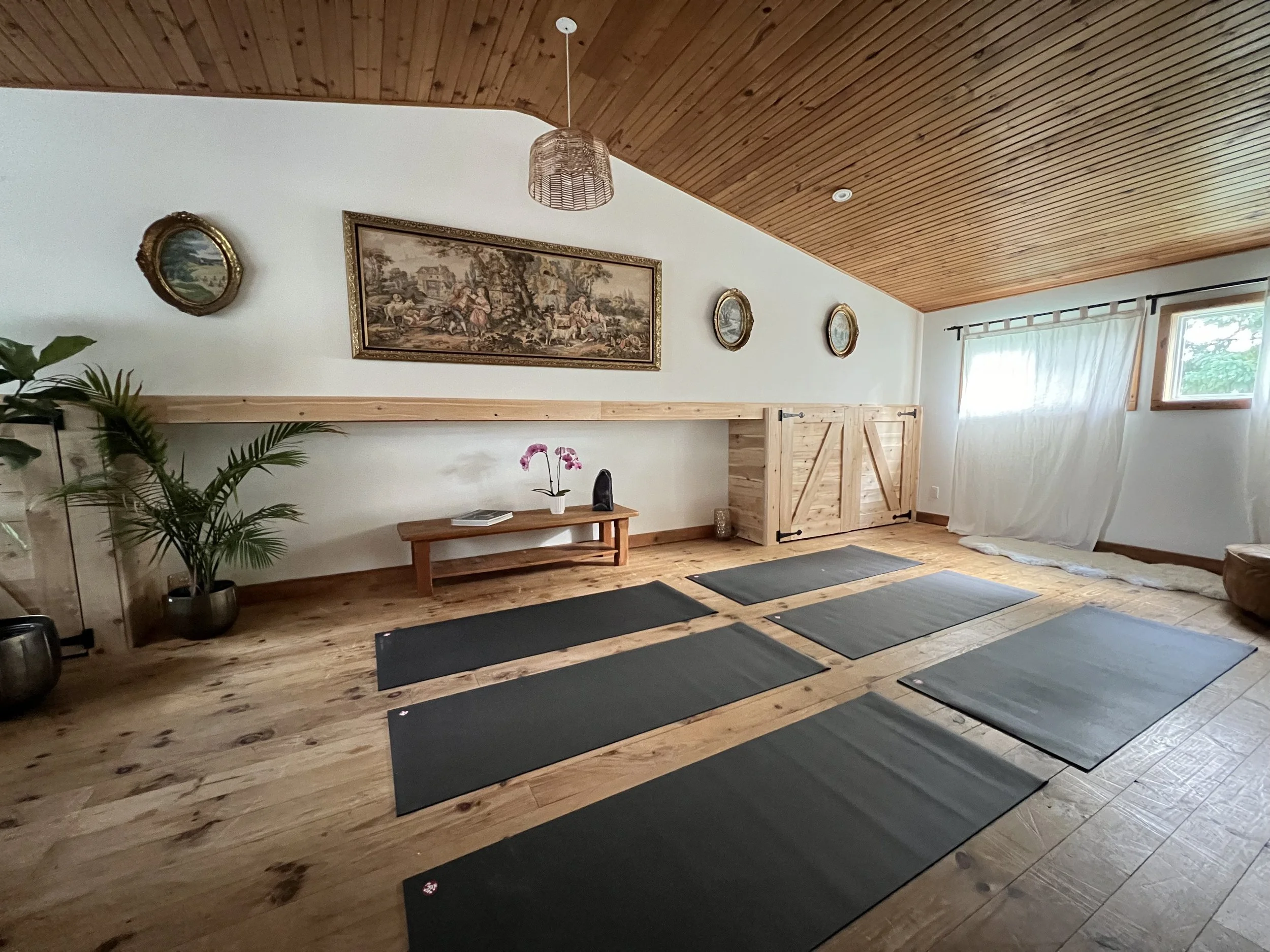
Warm layers for December, indoor shoes, a journal, and anything that helps you rest well. Mats, bolsters and blankets are provided.
-
Many clinicians use professional development funds for trainings like this one. We provide a detailed receipt and course outline for your records.
-
[Cancellation and transfer policy.]